Billy Joel

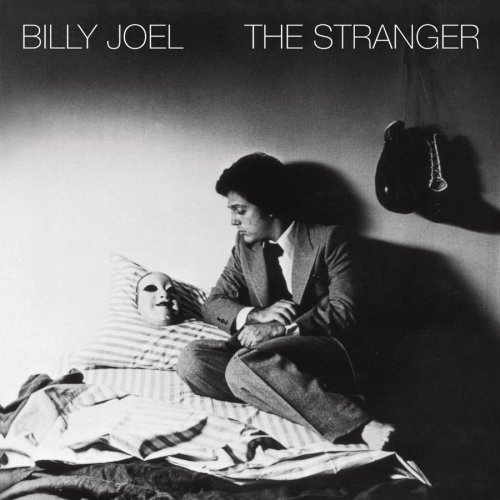
From our own knowledge and some research we knew "Vienna" was a song from Billy Joel's 1977 breakthrough album "The Stranger". Although neevr released as a single, Joel still cites this as one of his favourite songs.

We looked at various websites and found a re-occuring story that Joel told when asked about the song and why he chose Vienna to represent a sanctuary to reitire into while the rest of you life awaits:
"Why did I pick Vienna to use as a metaphor for the rest of your life? My father lives in Vienna now. I had to track him down. I didn't see him from the time I was 8 'till I was about 23-24 years old. He lives in Vienna, Austria which I thought was rather bizarre because he left Germany in the first place because of this guy named Hitler and he ends up going to the same place that Hitler hung out all those years! Vienna, for a long time was the crossroads. During the Cold War, between the Eastern Bloc, the Warsaw Pact nations and the NATO countries was the city of Vienna... Vienna was always the crossroads - between the Ottoman Empire and the Holy Roman Empire. So the metaphor of Vienna has the meaning of a crossroad. It's a place of inter...course, of exchange - it's the place where cultures co-mingle. You get great beer in Vienna but you also get brandy from Armenia. It was a place where cultures co-mingled.
So I go to visit my father in Vienna, I'm walking around this town and I see this old lady. She must have been about 90 years old and she is sweeping the street. I say to my father "What's this nice old lady doing sweeping the street?" He says "She's got a job, she feels useful, she's happy, she's making the street clean, she's not put out to pasture". We treat old people in this country pretty badly. We put them in rest homes, we kinda kick them under the rug and make believe they don't exist. They [the people in Vienna] don't feel like that. In a lot of these older places in the world, they value their older people and their older people feel they can still be a part of the community and I thought 'This is a terrific idea - that old people are useful -and that means I don't have to worry so much about getting old because I can still have a use in this world in my old age. I thought "Vienna waits for you..."
There is also a lot of inside stuff on the song. The beginning and the end is very Kurt Weill. That kind of sick, middle-European, kinky decadent thing.. cabaret kinda.... there's a lot of crazy stuff going on. We are seeing the result of it in this ethnic warfare in the Balkans which is a tragedy. This century started out with this Assassination of the Archduke in Sarajevo and that begat World War I which begat the Russian Revolution, then you had the Depression then that begat World War II and then that begat the Cold War and all that's over but they're still blowing each other to smithereens in Sarajevo. So this whole thing is going on in middle Europe - it's Kurt Weill. And some composers, Dvořák, Smetana - they captured it."


No comments:
Post a Comment